
AROID ARTIST BLOG

Dormancy Cycle in Aroids
Hardy outdoor aroids, like Sauromatum, experience dormancy as part of their natural growth cycle, especially in regions with distinct seasons. Sauromatum species, commonly known as voodoo lilies go through a period of dormancy usually during the winter months or in response to adverse environmental conditions like extreme cold or drought. It is common in a wide range of UK hardy aroids such as Amorphophallus, Colocasia, Pinellia, Arisaema, Remasutia, Ariopsis, Arum but in a different cycle and many more.
During dormancy:
Leaf Dieback: The plant will start to show signs of leaf dieback, where the leaves gradually wither and die. This process can be natural and doesn't necessarily indicate a problem with the plant.
Reduced Growth: Growth slows down significantly or stops altogether. New growth may cease, and the plant may appear dormant or completely inactive.
Storage of Energy: The plant often stores energy and nutrients during its active growth phases, utilizing these reserves to sustain itself through the dormancy period. The leaves will completely die off and only an underground tuber will remain.
Underground Activity: While the above-ground parts of the plant might seem inactive, lifeless or die off all together, underground structures like tubers have been storing nutrients and preparing for the next growing season.
Environmental Response: Dormancy in hardy outdoor aroids can be triggered by environmental cues like shorter days, cooler temperatures, or reduced daylight hours. These conditions signal the plant to enter a period of rest to conserve energy.
During this dormancy phase, it's crucial to adjust care practices:
Reduced Watering: Since the plant's growth has slowed or stopped, it requires less water. Watering should be reduced to prevent overwatering, which could lead to root rot during this inactive phase.
Protection from Extreme Conditions: Providing some protection against extreme cold or frost during dormancy can help ensure the survival of the plant.
Minimal Fertilization: Fertilization should be limited or stopped during dormancy since the plant's nutrient requirements are significantly reduced.
Understanding the natural dormancy patterns of hardy outdoor aroids like Sauromatum is essential for proper care. Resuming regular care routines should be done when signs of new growth emerge, indicating the end of the dormancy phase and the beginning of the active growth period.
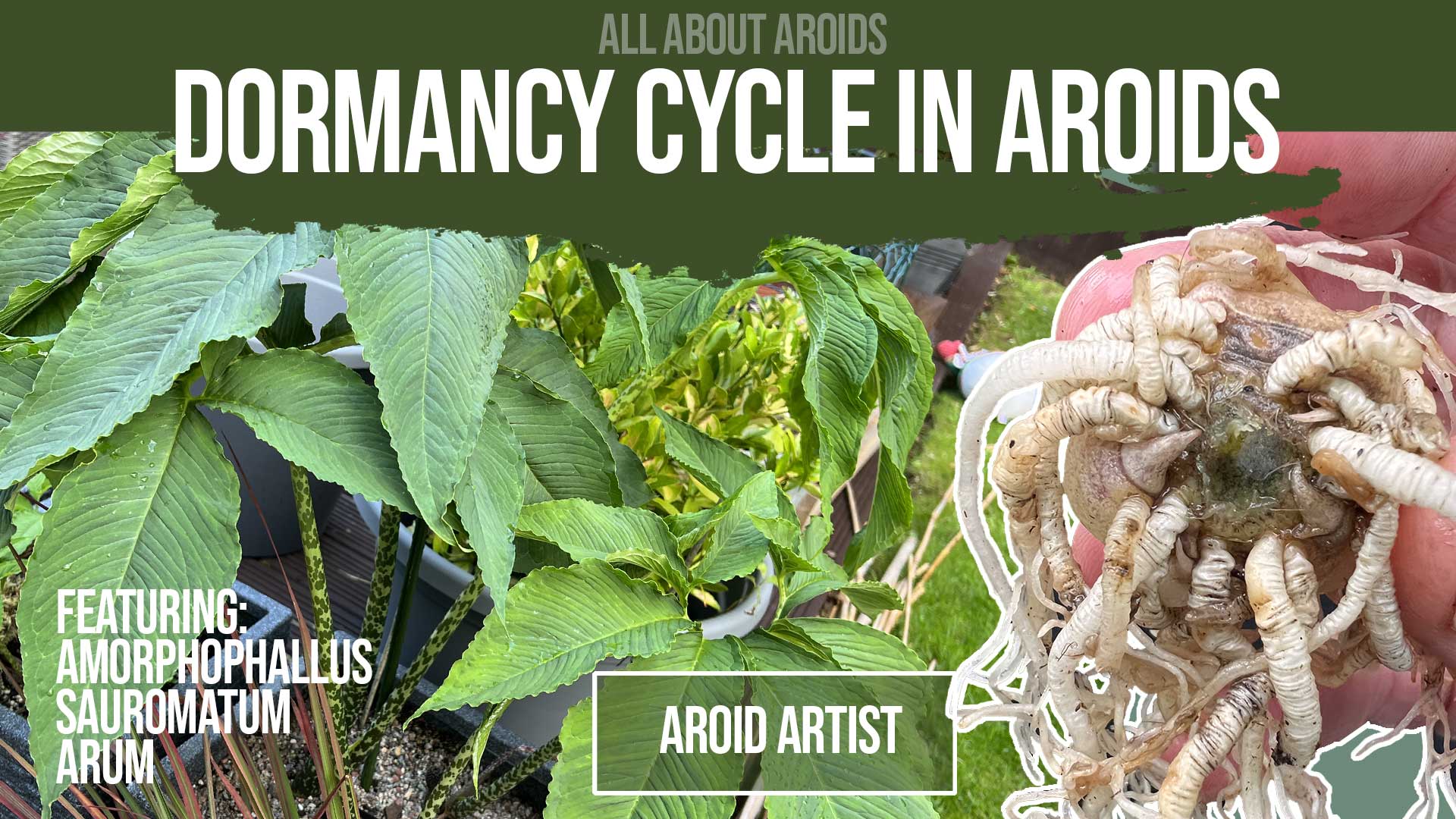
Click on the image below to watch my YouTube video.

Aroid Artist
Frodsham Business Centre,
Bridge Lane, Frodsham,
Cheshire, WA6 7FZ
info@aroidartist.com
Tel: + 44 7713 150891


| Privacy policy | ©Southerngfx Limited 2023 All rights reserved